Humanitarian Medicine Without Borders
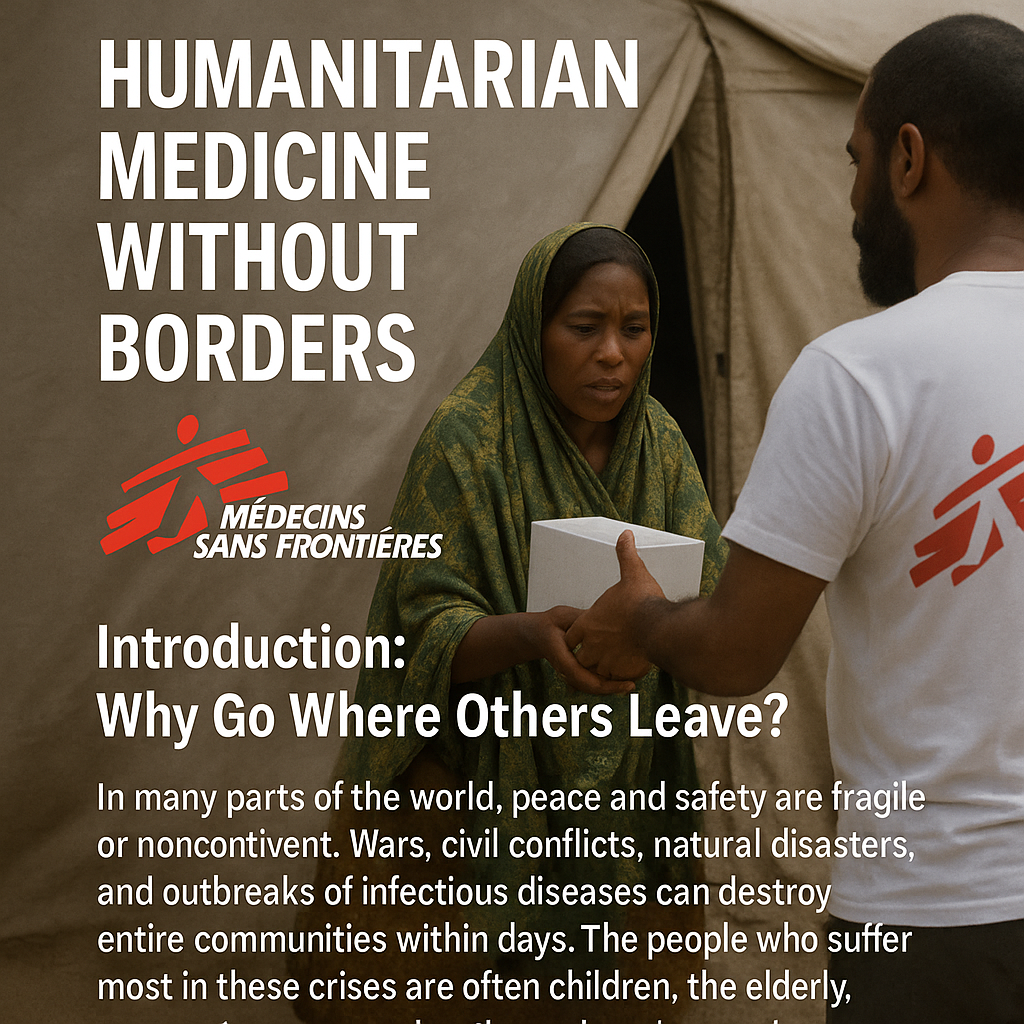
1. Introduction: Why Go Where Others Leave?
In many parts of the world, peace and safety are fragile or nonexistent. Wars, civil conflicts, natural disasters, and outbreaks of infectious diseases can destroy entire communities within days. The people who suffer most in these crises are often children, the elderly, pregnant women, and other vulnerable populations.
While most people seek safety and security, Doctors Without Borders (Médecins Sans Frontières, MSF) runs toward danger. They set up field hospitals in active war zones, deploy medical staff to remote communities with no access to healthcare, and work in refugee camps overwhelmed by disease and trauma. MSF lives up to its name by crossing borders, both geographical and political, to deliver life-saving care to those in desperate need.
2. What is MSF?
Médecins Sans Frontières (Doctors Without Borders) was founded in 1971 in Paris by a group of doctors and journalists who believed that medical aid should know no boundaries. Since then, MSF has grown into a global humanitarian medical organization recognized for its fearless commitment to human life and dignity.
MSF operates on three guiding principles: neutrality, independence, and impartiality. It avoids taking sides in political conflicts and maintains financial independence by relying largely on private donations. This allows MSF to work in areas where many other organizations cannot operate because of political constraints.
In recognition of its commitment, MSF was awarded the 1999 Nobel Peace Prize, underscoring the vital role it plays in humanitarian relief.
3. Core Mission and Values
(1) Neutrality
MSF does not align with any political party or military force. This neutrality often allows safe passage and access to vulnerable populations even in active conflict zones.
(2) Independence
MSF finances over 95% of its operations with private donations, reducing reliance on government funding. This financial independence ensures that no political agenda influences the selection of missions or the nature of assistance provided.
(3) Humanity Above All
At its core, MSF exists to preserve life and alleviate suffering wherever it is found, regardless of nationality, race, religion, or political affiliation.
4. Notable Activities and Impact
(1) Emergency Response in Syria
During the Syrian civil war, hospitals were often targets of attacks, leaving millions without access to healthcare. MSF set up secret field hospitals and mobile clinics, treating the wounded and delivering babies even under constant threat of airstrikes. Many MSF workers risked—and in some cases lost—their lives in service of patients who otherwise would have had no medical care.
(2) Ebola Virus Outbreak
When Ebola swept through West Africa in 2014, MSF was among the first organizations on the ground. Their rapid deployment of treatment centers and training of local staff were critical in slowing the spread of the deadly virus. MSF doctors and nurses, fully aware of the risks, worked around the clock in biohazard suits, saving thousands of lives and providing valuable expertise for future outbreak responses.
(3) Rohingya Refugee Crisis
Following the mass displacement of the Rohingya population from Myanmar, MSF operated clinics in refugee camps in Bangladesh. With limited sanitation and high disease risk, MSF provided essential healthcare, vaccinations, and hygiene education, preventing potential epidemic outbreaks in crowded camps.
5. MSF and South Korea: From Beneficiary to Contributor
South Korea was once a country dependent on international aid. Today, it contributes to humanitarian work globally, including through MSF Korea, which officially launched in 2012. MSF Korea recruits donors, dispatches medical staff, and runs awareness campaigns to build support for global health emergencies.
Many Korean healthcare professionals—including doctors, nurses, pharmacists, and mental health experts—have volunteered to serve in MSF missions abroad. Their participation demonstrates how Korea has transitioned from an aid recipient to an aid provider, creating a powerful model of global solidarity.
6. How to Donate to MSF from Korea
(1) Regular Donations
By signing up for monthly donations via MSF’s official website, individuals provide a stable source of funding that ensures rapid response when emergencies strike.
(2) One-Time Donations
Donors can contribute to specific campaigns, such as “Emergency Medical Support for Ukraine” or “Disaster Relief in Africa.”
(3) Legacy and Corporate Donations
Corporate social responsibility (CSR) programs and legacy giving (planned giving in wills or estates) are increasingly popular ways to support MSF’s global missions at scale.
7. Financial Transparency and Accountability
MSF consistently allocates over 80% of its funds directly to field operations, including purchasing medicine, paying medical staff, and running treatment facilities. Only a small portion is used for administrative and fundraising purposes. Every year, MSF publishes a detailed financial report, ensuring that donors know exactly how their money is spent and reinforcing the organization’s reputation for transparency.
8. Voices from Donors and Volunteers
> “As a doctor, I dreamed of participating in humanitarian missions, but life and responsibilities at home made it difficult. When I discovered I could support MSF financially, I realized I could still be part of saving lives. Every monthly donation feels meaningful, knowing it helps doctors and nurses on the frontlines.” – Donor from Seoul, 39 years old
Donors don’t need to be in the field themselves to make a difference. By supporting MSF, they empower trained professionals to deliver care where it is most desperately needed.
9. Why Donate to MSF?
Among the many humanitarian NGOs, MSF stands out for its medical expertise and ability to operate in dangerous and hard-to-reach locations. While some organizations focus on delivering food or infrastructure, MSF specializes in delivering healthcare where it is otherwise unavailable, often saving lives in immediate danger.
Because MSF is politically independent, donors can trust that their contributions are used solely for humanitarian purposes, not influenced by governmental or corporate agendas. This transparency and clarity of mission make MSF one of the most trusted global charities.
10. Conclusion: Small Actions, Big Impact
MSF is more than an aid organization; it is a lifeline for people in crises who have nowhere else to turn. Their work goes beyond medicine—it preserves dignity, saves lives, and restores hope.
Your small donation can mean medicine for a sick child, emergency surgery for a war victim, or mental health support for a traumatized refugee. In humanitarian work, every contribution counts, and MSF has proven time and again that even small actions can have an extraordinary impact.
'캠패인 (Campaingn)' 카테고리의 다른 글
| [3] 「WWFとは?絶滅危惧種と環境保護を支える寄付の方法」 (0) | 2025.08.06 |
|---|---|
| [3] “Why Donate to WWF? Protect Endangered Species and the Planet” (0) | 2025.08.06 |
| [2] 「国境なき医師団(MSF)とは?危険地帯で命を救う医療支援」 (0) | 2025.08.06 |
| [1] UNICEF - 「子どもへの投資が世界を変える|ユニセフの支援と寄付」 (1) | 2025.08.06 |
| [1] “Why Donating to UNICEF Helps Change the World for Children” (1) | 2025.08.04 |