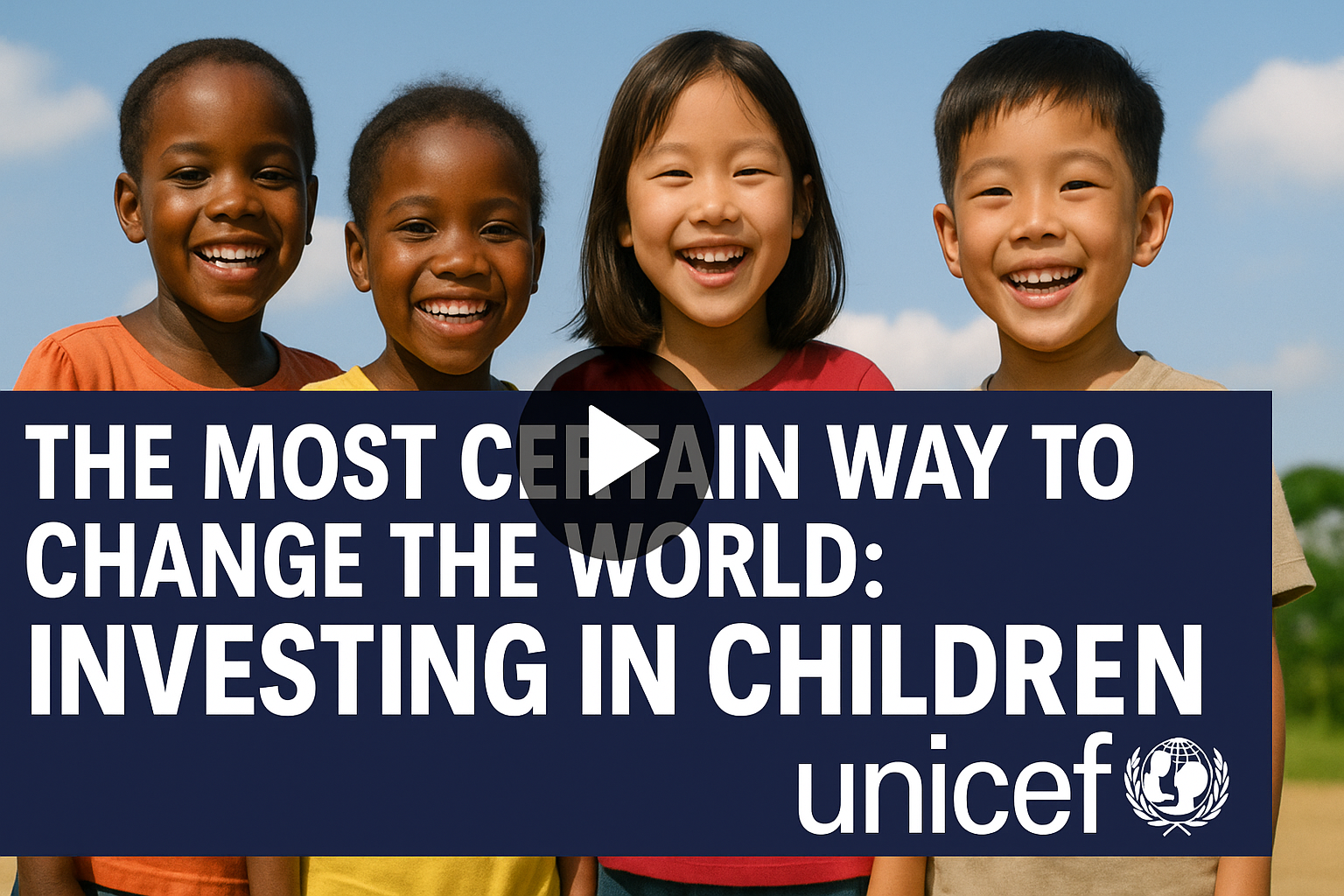
The Most Certain Way to Change the World: Investing in Children
1. Introduction: Why Children Matter
The world around us is changing at an unprecedented pace. Technology is evolving, industries are transforming, and overall living standards have improved compared to past decades. Yet, behind this progress, there are still millions of children who have no access to basic education, safe drinking water, or even basic medical care. These children are not responsible for the circumstances they are born into, yet they face barriers that prevent them from reaching their full potential.
UNICEF (United Nations International Children’s Emergency Fund) exists to protect the dignity, rights, and future potential of these children. Children are not simply passive recipients of aid—they are the very foundation of a nation’s future. When one child receives proper nutrition and education, the ripple effect can transform an entire community.
2. What is UNICEF?
UNICEF was established in December 1946 by the United Nations General Assembly in the aftermath of World War II, initially to provide emergency food and medical care to children who had been affected by the war. Over time, UNICEF’s mission evolved from emergency relief to a global commitment to children’s rights, welfare, and development.
Today, UNICEF operates in more than 190 countries and territories with a clear set of goals:
Child Survival and Development: Providing vaccines, clean water, proper nutrition, and medical care
Education: Ensuring access to quality education even in conflict zones or extreme poverty
Child Protection: Safeguarding children from violence, exploitation, and abuse
Equity and Inclusion: Promoting equal opportunities, especially for girls, disabled children, and vulnerable groups
The core principle is simple but powerful: “Every child has the right to survive, to be protected, and to thrive.”
3. Key UNICEF Programs and Achievements
(1) Vaccination and Disease Prevention
UNICEF delivers more than 2.5 billion doses of vaccines every year, protecting children against preventable diseases like measles, polio, and tetanus. These efforts have significantly reduced child mortality worldwide. For example, UNICEF-led vaccination campaigns have led to a 99% reduction in polio cases in Africa—a staggering public health success.
(2) Clean Water and Sanitation
Access to safe drinking water is a basic human right, yet many children still drink contaminated water every day. UNICEF installs water pumps, provides hygiene education, and builds sanitation facilities. These interventions have drastically lowered the incidence of waterborne diseases such as cholera and diarrhea, which previously caused countless child deaths annually.
(3) Education Access and Equality
Education is the strongest tool to break the cycle of poverty. UNICEF builds temporary schools in disaster zones, distributes learning materials, and works to keep girls in school. Programs that supply school uniforms, menstrual hygiene kits, and scholarships have been transformative, enabling more girls to complete their education and move toward self-sufficiency.
(4) Emergency Response
In crises—whether natural disasters, armed conflicts, or refugee emergencies—UNICEF is often among the first responders. In Syrian refugee camps, for example, UNICEF has built temporary learning centers and provided psychosocial support to help children process trauma while continuing their education.
4. UNICEF and South Korea: From Aid Recipient to Global Contributor
Few people know that South Korea was once a recipient of UNICEF aid. In the years following the Korean War, UNICEF provided essential supplies such as powdered milk, vaccines, and school materials to Korean children.
Today, South Korea has transformed into one of the world’s most advanced economies and is now a major donor. The Korean Committee for UNICEF actively supports international aid programs, recruits regular donors, and conducts educational campaigns on child rights. This evolution—from aid recipient to aid provider—is often cited as a remarkable example of sustainable development and global solidarity.
5. How to Donate to UNICEF from South Korea
(1) Regular Monthly Donation
You can sign up for monthly donations through UNICEF’s official website or mobile applications. Even a small recurring contribution (e.g., $10–$50 per month) ensures sustainable, long-term support for children worldwide.
(2) One-Time Donations
Supporters can also donate to specific campaigns, such as emergency relief or vaccination drives. Various payment options, including credit card and bank transfers, are available to make it convenient.
(3) Legacy and Corporate Donations
In addition to individual giving, companies and individuals can engage in legacy donations (planned giving) or corporate social responsibility (CSR) partnerships. This approach allows larger-scale impact while promoting shared social values.
6. Financial Transparency and Accountability
One of the main reasons people hesitate to donate is the fear of misuse or misallocation of funds. UNICEF addresses this concern by maintaining strict transparency and accountability standards. Each year, UNICEF publishes detailed financial reports showing how funds are used. Over 90% of contributions directly support programs, with the remaining amount covering essential administrative costs.
This level of openness has earned UNICEF global trust and recognition, making it one of the most reputable humanitarian organizations in the world.
7. Testimonial from a Donor
> “At first, I doubted that my small monthly donation would make any difference. Then I received a newsletter from UNICEF showing how my contributions helped install a water well, allowing children to drink safe water. I felt emotional, realizing that even a small act can create meaningful change.” – Donor from Seoul, 42 years old
Donors are not just people who give money—they are partners in creating a safer, healthier, and more equitable world.
8. Why Your Contribution Matters
Many people think:
> “I don’t have much money to give. Will it really make a difference?”
But UNICEF’s philosophy is clear: “Every Child, Every Right.”
Even a small donation—equivalent to the cost of one coffee a day—can give a child clean water, a life-saving vaccine, or a chance to go to school.
Your contribution is not about the size of your wallet; it’s about the value you place on humanity.
9. Conclusion: Giving is Not Charity, It is Responsibility
UNICEF is not just a charity; it is a global movement to secure humanity’s future. Children are our future leaders, innovators, and caregivers. Ensuring their right to health, safety, and education is not an act of kindness—it is our collective responsibility.
Your small step can lead to monumental change. UNICEF is ready to take action; now, your choice can ignite the change we all need.
'캠패인 (Campaingn)' 카테고리의 다른 글
| [3] 「WWFとは?絶滅危惧種と環境保護を支える寄付の方法」 (0) | 2025.08.06 |
|---|---|
| [3] “Why Donate to WWF? Protect Endangered Species and the Planet” (0) | 2025.08.06 |
| [2] 「国境なき医師団(MSF)とは?危険地帯で命を救う医療支援」 (0) | 2025.08.06 |
| [1] UNICEF - 「子どもへの投資が世界を変える|ユニセフの支援と寄付」 (1) | 2025.08.06 |
| [2] “What Is MSF? How Medical Aid Saves Lives in Conflict Zones” Without Borders (0) | 2025.08.04 |