Global Solidarity for a Sustainable Future: Supporting the World Food Programme (WFP)
Meta Description: Discover how the World Food Programme (WFP) fights global hunger, its signature programs, and how you can support its mission for a sustainable, hunger-free future.
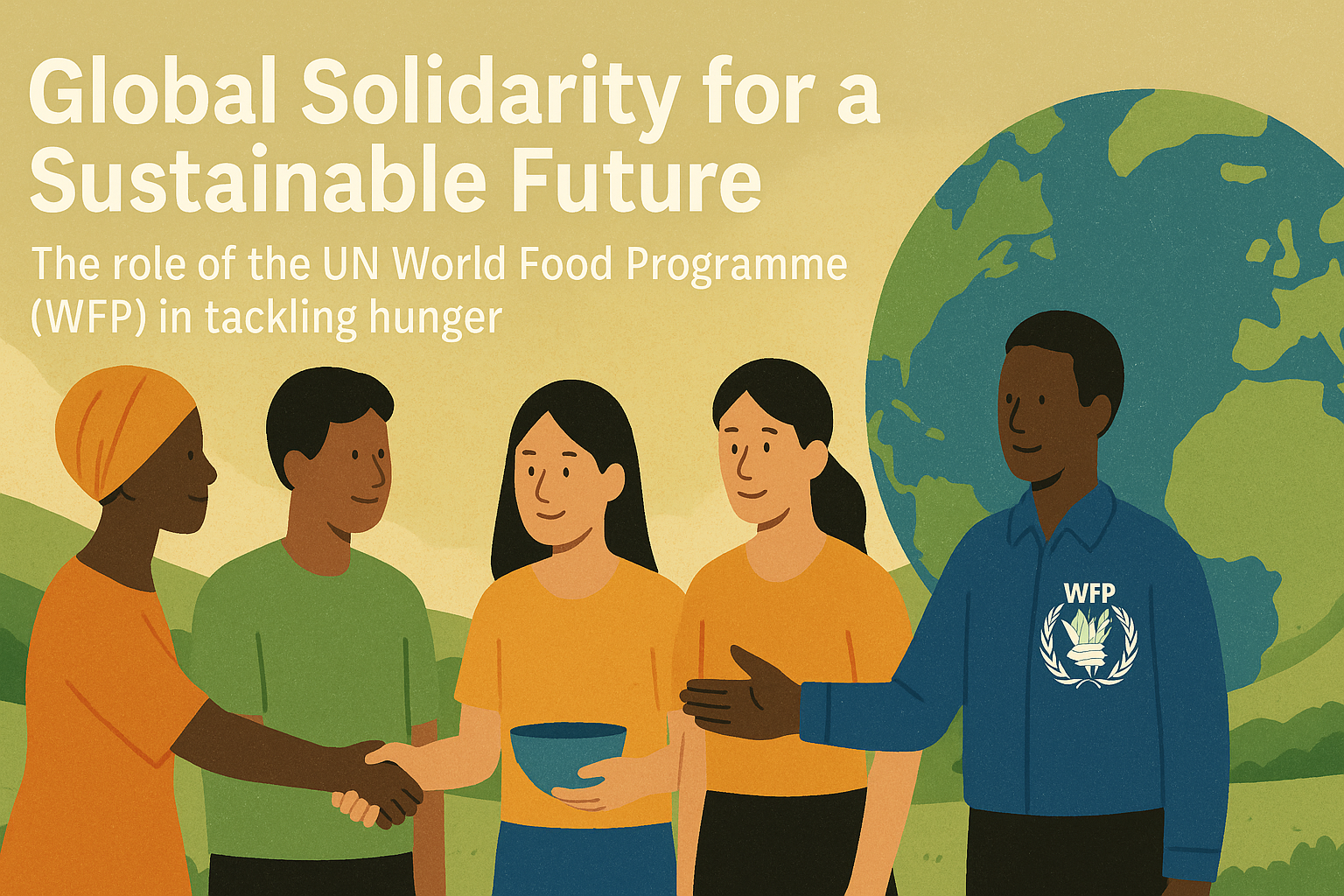
1. Introduction: Why Solving Hunger Matters
Hunger and malnutrition are global challenges that impact health, education, economic growth, and social stability. More than 820 million people suffer from chronic hunger, and millions of children die annually due to malnutrition.
Ending hunger is not only a moral responsibility—it is a central goal of the United Nations Sustainable Development Goals (SDGs). Leading this fight is the World Food Programme (WFP), the world’s largest humanitarian organization focused on eliminating hunger and building food security.
2. What is the WFP?
The World Food Programme (WFP) was established in 1961 by the United Nations and is headquartered in Rome, Italy. Operating in more than 80 countries, WFP delivers food assistance during crises while also supporting long-term food system resilience.
In 2020, WFP was awarded the Nobel Peace Prize, recognizing its critical role in addressing hunger and fostering peace in conflict-affected areas.
3. WFP’s Core Goals
- Emergency Food Assistance – Rapid response to crises caused by war, disasters, or climate change.
- Nutrition Improvement – Specialized programs for pregnant women, infants, and schoolchildren.
- Building Local Food Resilience – Investments in agriculture, infrastructure, and community food systems.
- Climate Change Adaptation – Promoting climate-smart agriculture and disaster risk reduction.
4. Signature WFP Programs
- School Meals Programme – Provides children with daily meals, improving education and health outcomes.
- Cash and Voucher Assistance – Offers families food vouchers and cash transfers to support local markets.
- Specialized Nutrition Products – Distributes nutrient-rich supplements to fight child malnutrition.
- Disaster Response and Recovery – Immediate food aid followed by community rebuilding initiatives.
5. WFP and South Korea
South Korea, once a recipient of food aid in the 1950s, is now a donor country. Today, Korea contributes through financial support, agricultural innovation, and volunteer engagement. Notably, it assists in WFP nutrition programs for children and pregnant women in North Korea, emphasizing peace and humanitarian cooperation.
6. How to Donate to the WFP
- Monthly Donations – Provide stable support through the WFP official website.
- One-Time Giving – Contribute during emergency appeals for immediate crisis response.
- Corporate & Legacy Giving – Companies partner via CSR programs; individuals can include WFP in wills or donate assets.
7. Transparency and Accountability
WFP ensures that over 90% of all donations go directly to field operations, making it one of the most trusted global humanitarian organizations.
8. Voices from Donors
“After learning about WFP’s school meals program, I realized how even a small monthly donation can provide life-saving food for children. Seeing the real impact is truly rewarding.” – Donor, 31
Donors are not just supporters—they are partners in building a hunger-free future.
9. Why Donate to WFP?
- Proven track record and global infrastructure
- Integrated approach: emergency aid + long-term resilience
- Direct impact: every contribution helps save lives
Supporting WFP means investing in stronger communities, healthier children, and a more sustainable world.
10. Conclusion: A Hunger-Free World is Possible
Hunger is one of humanity’s greatest challenges—but also one we can solve. With the World Food Programme leading the fight, every donation and act of advocacy brings us closer to a sustainable, hunger-free future.
👉 Join WFP today. Your small action can change lives and protect the future of our planet.
'캠패인 (Campaingn)' 카테고리의 다른 글
| [8] International Environmental NGOs – Including Greenpeace (0) | 2025.08.15 |
|---|---|
| [7] 世界食糧計画(WFP)– 飢餓のない世界を目指して (0) | 2025.08.14 |
| [5] Save the Children – 子どもの権利保護と飢餓対策 (0) | 2025.08.09 |
| [5] Save the Children – Protecting Children’s Rights and Combating Hunger (0) | 2025.08.09 |
| [4] Charity: Water – 安全な水で命を救う (0) | 2025.08.08 |